
South Africa's National Research Foundation Faces a Funding Squeeze
South Africa's public research funding is under pressure from two directions. The National Research Foundation (NRF) is widening the groups it aims to support, while the number of students and researchers it can actually fund has fallen. That tension shapes the agency's position as it prepares to co-host an international research meeting in Cape Town in 2027.
A mandate that reaches beyond the laboratory
The National Research Foundation Act, as amended, gives the NRF a broad remit. The agency funds research and human capacity development in all fields, including the humanities, social sciences and Indigenous knowledge. It also builds and maintains national research facilities, supports government priorities and promotes public awareness of science. These obligations explain why its work extends well beyond laboratory grants.
The 2025 postgraduate framework sets out who should benefit. It plans for 80% of supported students to come from science, engineering and technology, and 20% from the social sciences and humanities. It allocates 55% of funding to women. For South African citizens and permanent residents, it sets a 90% target for Black (African, Coloured and Indian) recipients.
A shortfall in students and researchers
Targets and delivery do not always match. The NRF's 2023/24 annual report records 6,179 postgraduate students funded against a target of 5,943. It also records 3,261 researchers funded against a target of 3,612.
At an October 2024 parliamentary hearing, the chief executive put the national postgraduate total at about 170,000 students. The board chairperson said the number of funded students had fallen to around 6,000, compared with 11,000 to 12,000 in earlier years. He estimated a combined annual funding gap for students and researchers of ZAR 2.2 to 2.5 billion. The 2023/24 student target itself sat at roughly half the figure cited for those earlier years, so the reduced scale was already built into the agency's planning.
The main figures from these sources are:
- Funded postgraduate students (2023/24): 6,179 against a target of 5,943
- Funded researchers (2023/24): 3,261 against a target of 3,612
- Estimated annual funding gap: ZAR 2.2 to 2.5 billion for students and researchers combined
Support for early-career researchers and facilities
A ministerial reply to a parliamentary question, asked on February 26, 2026, outlines how the state supports researchers at the start of their careers. The Department of Science, Technology and Innovation requires that at least 50% of supported researchers come from the emerging category. The NRF runs programmes for early- and mid-career researchers, including Thuthuka and the Black Academic Advancement Programme. The Department has also launched the Advancing Early Career Researchers and Scholars Programme, which Universities South Africa implements.
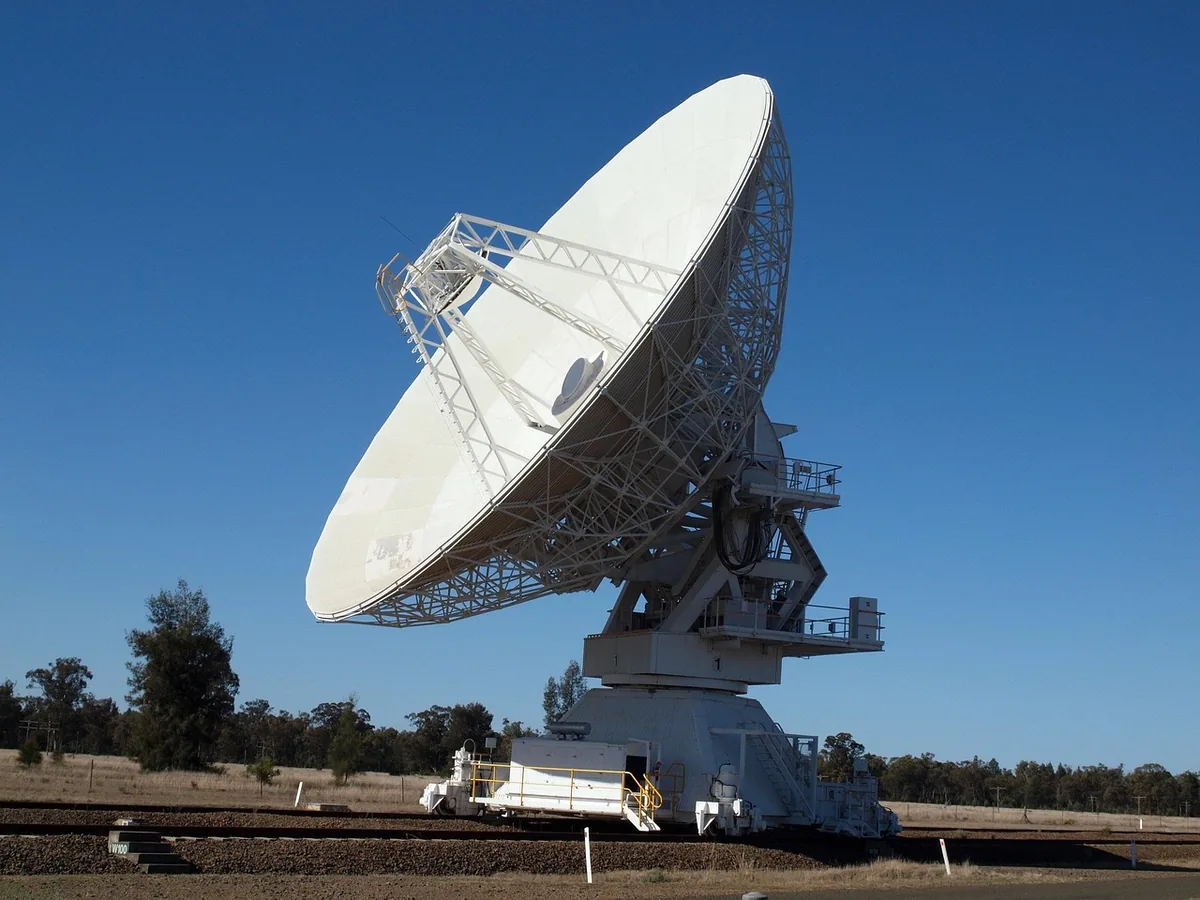
The NRF manages four national research facilities, among them the South African Radio Astronomy Observatory and iThemba LABS. It also oversees the South African Environmental Observation Network. The reply records major departmental funding for the Square Kilometre Array Observatory programme and joint investment with the NRF in the South African Isotope Facility.
The harder problem is upkeep. Much of the older equipment was built 20 to 30 years ago, and maintaining or refurbishing it is now the critical challenge. The Department and the NRF intend to apply to the National Treasury's Budget Facility for Infrastructure in 2026/27. At the 2024 hearing, the chief executive warned that infrastructure such as the cyclotron and telescopes could deteriorate without funding.
Engagement at home and partnerships abroad
The NRF pursues public engagement through the South African Agency for Science and Technology Advancement (SAASTA), a business unit tasked with raising public awareness of science, engineering, innovation and technology. Its international work runs through co-funded partnerships.
The Science Granting Councils Initiative now brings together 19 research funding organisations. At the Global Research Council's 2026 annual meeting in Bangkok, the NRF's Acting Chief Executive and the President of the German Research Foundation signed a third agreement covering 2026 to 2030. The new phase gives growing emphasis to curiosity-driven research. In 2027, the NRF and the German Research Foundation will co-host the Council's annual meeting in Cape Town.
The O.R. Tambo Africa Research Chairs Initiative supports 10 research chairs across seven countries, with the NRF funding a large part of it. On April 7, 2026, the NRF and the Social Sciences and Humanities Research Council of Canada opened the South Africa-Canada Seed Grant for Collaborative Research. The call closed on May 28, 2026. It will fund at most eight projects of 24 to 36 months, on themes that include environmental sustainability and mathematics education.
Equity gains on a narrower base
At the NRF Awards in Gqeberha in September 2026, the agency reported bursaries for 5,951 postgraduate students in the 2025/26 financial year. Of these, 77% received full-cost-of-study support. The Minister noted that the share of Black South Africans among NRF-funded students rose to 86% in 2025, from 46% in 1999. About 63% of NRF funding goes to the 10 universities producing the most research. Slower growth in public investment has also limited how many financially disadvantaged students can benefit from the full-cost funding model introduced in 2020.
Read together, these figures show a consistent pattern. The 2025/26 bursary count and the 2023/24 student count both sit near the 6,000 level the board chairperson described in 2024. The equity gains therefore apply to a cohort roughly half its earlier size. The 86% figure approaches the framework's 90% target, although that target counts only citizens and permanent residents. Support is also shaped by career stage, through the Department's 50% requirement for emerging researchers.